How Artists Used Series to Develop a Recognizable Visual Language
At some point in nearly every artist’s career, a quiet question emerges:
How do I make a body of work that feels cohesive, work that’s unmistakably mine?
Art history offers a surprisingly consistent answer, and it isn’t novelty for novelty’s sake. Again and again, artists who developed enduring, recognizable visual languages did so not by constantly changing direction, but by returning to an idea and staying with it. They worked in series.
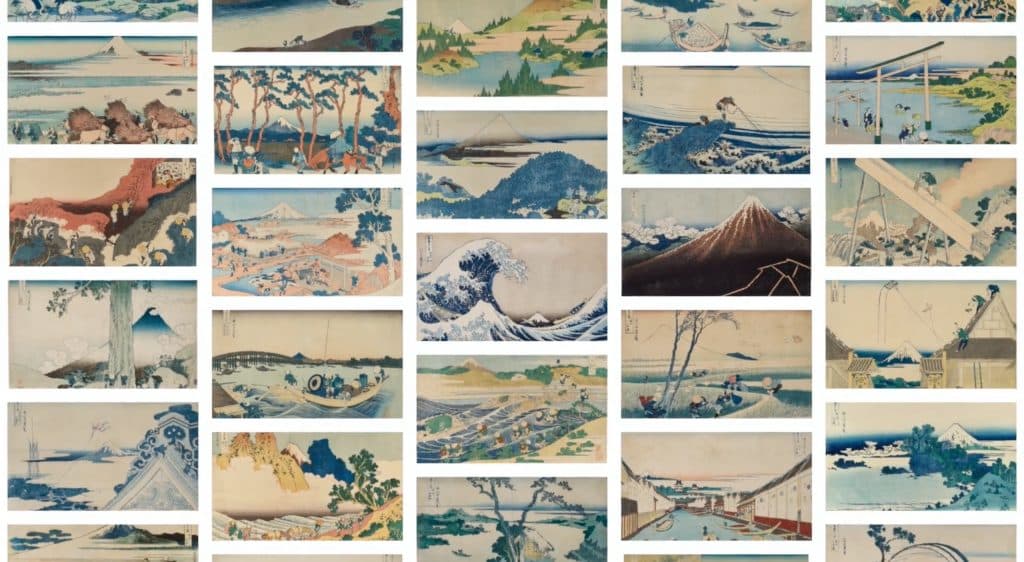
From Claude Monet’s haystacks to Katsushika Hokusai’s mountain, from Cindy Sherman’s constructed identities to Andy Warhol’s silkscreened icons, artists across centuries and cultures have used series to refine their thinking, sharpen their vision, and build bodies of work that feel intentional rather than accidental.
A series is not repetition for convenience. It is repetition with purpose. And for centuries, it has been one of the most effective ways artists have clarified who they are, and what they are trying to say.
Why Series Matter in Art History
When viewed in isolation, a single artwork can be compelling. But when works are seen together (linked by theme, subject, method, or inquiry) they begin to speak a different language.
Series allow artists to:
- Explore an idea from multiple angles
- Test variations without abandoning the core concept
- Build rhythm and continuity across individual works
- Reveal evolution over time
Art history is full of examples of artists who didn’t “find” their voice overnight, but built it through sustained attention to a single idea. The result wasn’t monotony, it was coherence.
🖼️ Monet’s Haystacks: Seeing Through Variation
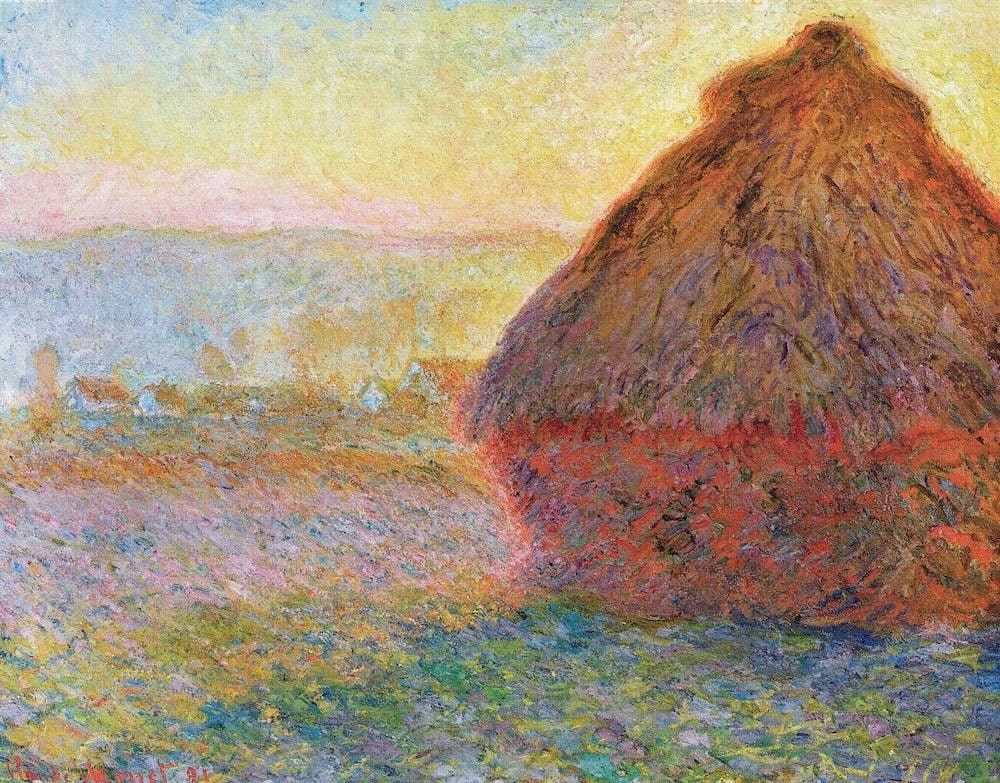
Claude Monet’s Haystacks (Les Meules à Giverny) series is often cited as a turning point in modern painting; not because the subject was groundbreaking, but because of how he approached it.
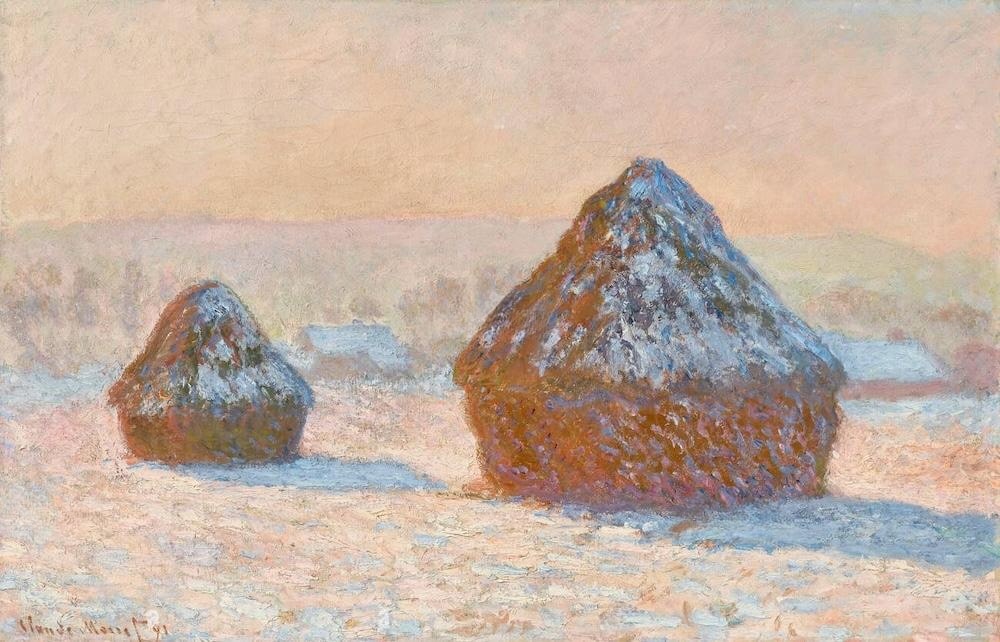
Long before his famous Water Lilies (Nymphéas) series, Monet spent the years between 1890 and 1891 painting nearly thirty versions of the same haystacks in a field near his home in Giverny, France. At first glance, the subject feels almost mundane; however, Monet wasn’t interested in the haystacks themselves. He was studying light, weather, and time.
By returning to the same subject day after day, Monet could focus on subtle shifts: how color changes at sunrise, how fog softens form, how winter light differs from summer glow. The subject stayed the same so the seeing could change.
While working on Haystacks, Monet wrote to the journalist and art critic Gustave Geffroy:
“I am working very hard, struggling with a series of different effects (haystacks), but at this season the sun sets so fast I cannot follow it. . . . The more I continue, the more I see that a great deal of work is necessary in order to succeed in rendering what I seek.”
Haystacks was the first group of paintings that Monet exhibited as a series. One haystack painting might feel pleasant. A room full of them tells a story about time, attention, and how vision itself changes. The series allowed Monet to go deeper instead of wider, and that depth became the foundation of his visual language.
🎨 RELATED READING: The Slow Studio | Why Working at Your Own Pace Can Lead to Better Art
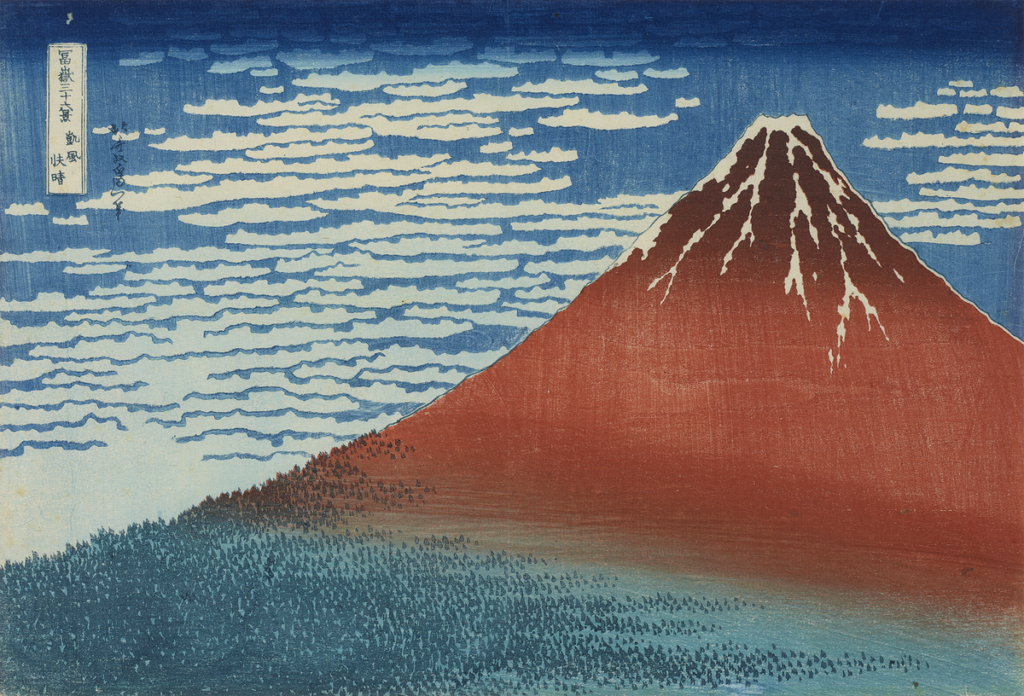
⛰️ Hokusai and the Strength of a Central Motif
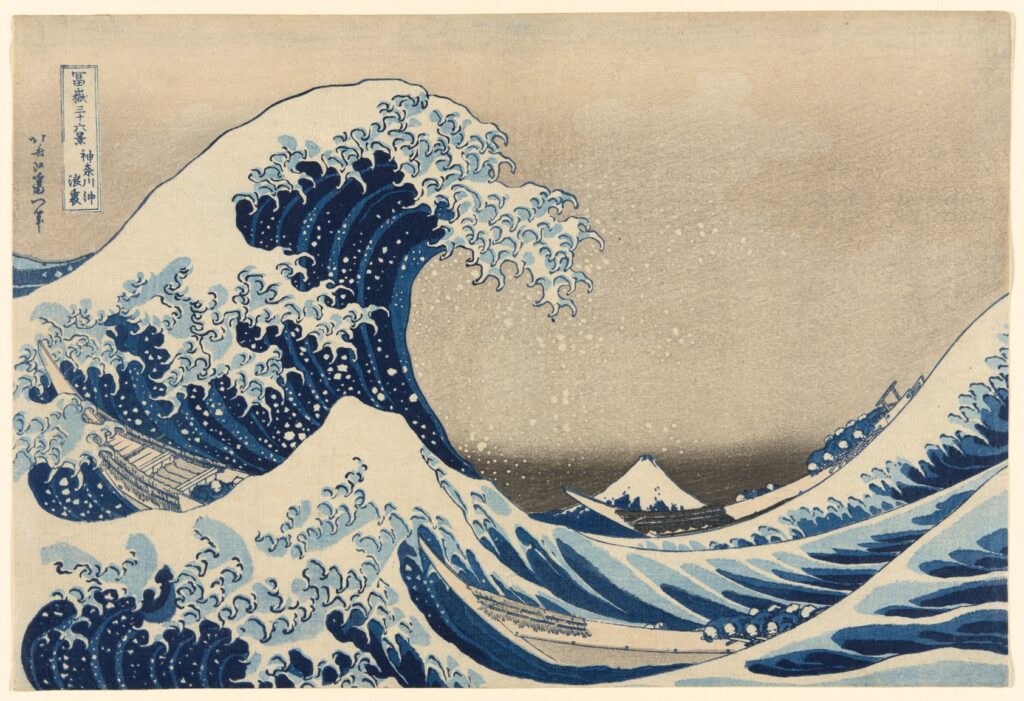
Created nearly half a century before Monet’s Haystacks, Katsushika Hokusai’s Thirty-Six Views of Mount Fuji (1830–1832) offers another masterclass in working in series. In each woodblock print, Mount Fuji appears again and again: sometimes monumental, sometimes distant, sometimes nearly hidden by mist or daily life.
One of the most famous prints, The Great Wave, is part of this series, showing how Hokusai could combine dramatic composition, dynamic movement, and the constant presence of Japan’s most sacred mountain to create a striking and memorable image.
Another remarkable feature of the series is Hokusai’s use of Prussian Blue pigment, which had recently arrived in Japan from Europe. The vivid, enduring blue gave depth and clarity to the landscapes, tying the series together visually and allowing the mountain to remain the anchor while the surrounding world shifted.
Hokusai understood that repetition builds familiarity, and familiarity builds impact. By keeping the mountain constant, viewers could notice subtle differences in composition, perspective, and narrative. The mountain became a visual anchor; the world around it was constantly changing.
This approach gave Thirty-Six Views a strong internal logic, making the series feel intentional and unified rather than scattered—and memorable, a key factor for artists developing a recognizable visual language.
📸 Cindy Sherman: Series as Conceptual Framework
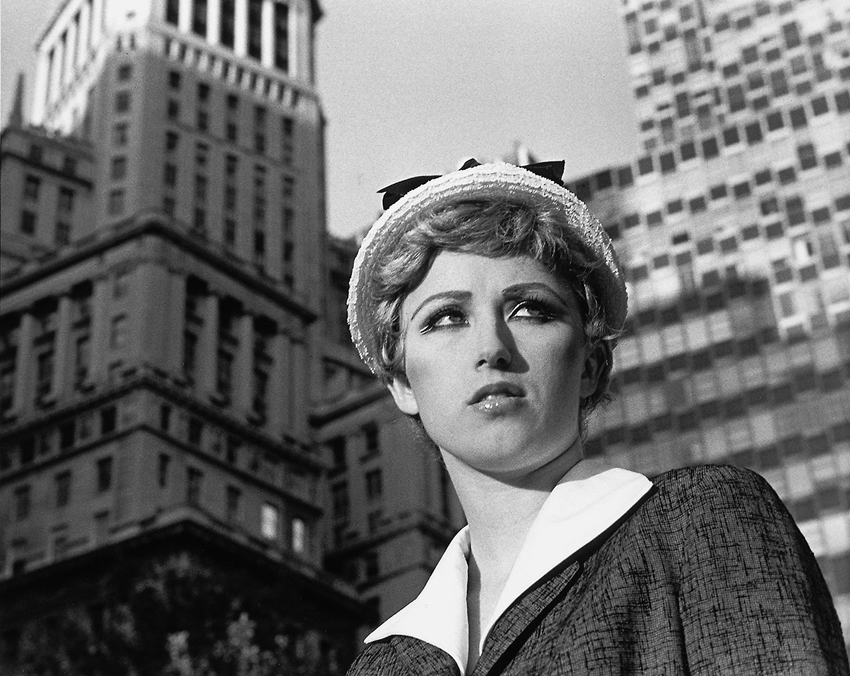
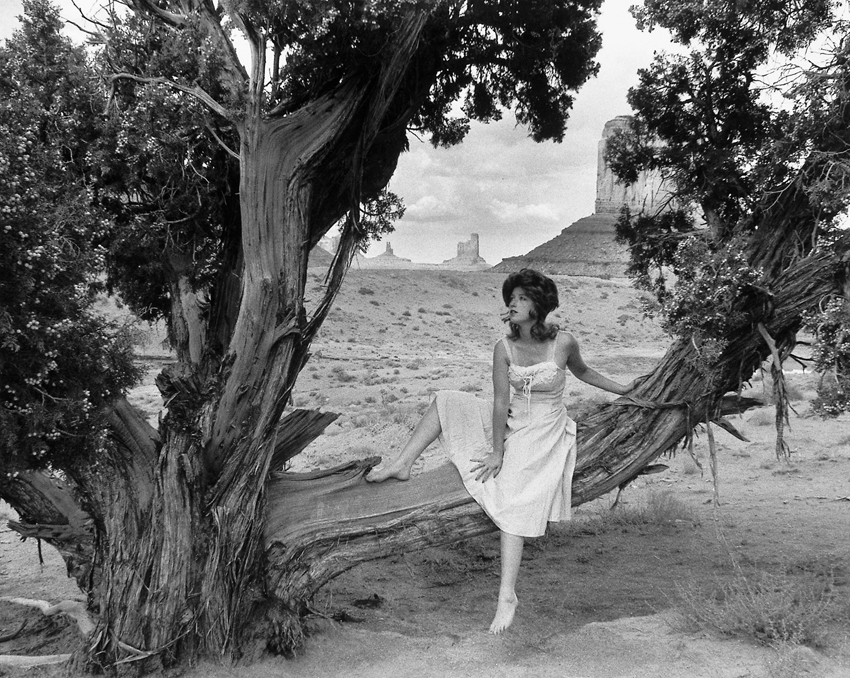
While Monet and Hokusai returned to landscapes, Cindy Sherman turned repetition inward.
Sherman’s Untitled Film Stills (1977–1980) consist of dozens of black-and-white photographs in which she appears as different fictional female characters. Each image feels cinematic, as if taken from a movie that never existed.
What makes the series powerful is not any single photograph, but the accumulation. By repeatedly placing herself in front of the camera—changing costume, posture, expression, and context—Sherman exposed how identity is constructed, performed, and consumed. The repetition forces the viewer to notice patterns: how women are portrayed, how narratives are assumed, how images shape perception.
Sherman’s work demonstrates that a series can function as a sustained conceptual argument. Each photograph builds on the last, reinforcing themes of anonymity, performance, and representation. Her practice also shows that working in series allows artists to inhabit an idea long enough to uncover its full complexity. Repetition becomes the message.
🥫Andy Warhol: Repetition as Recognition
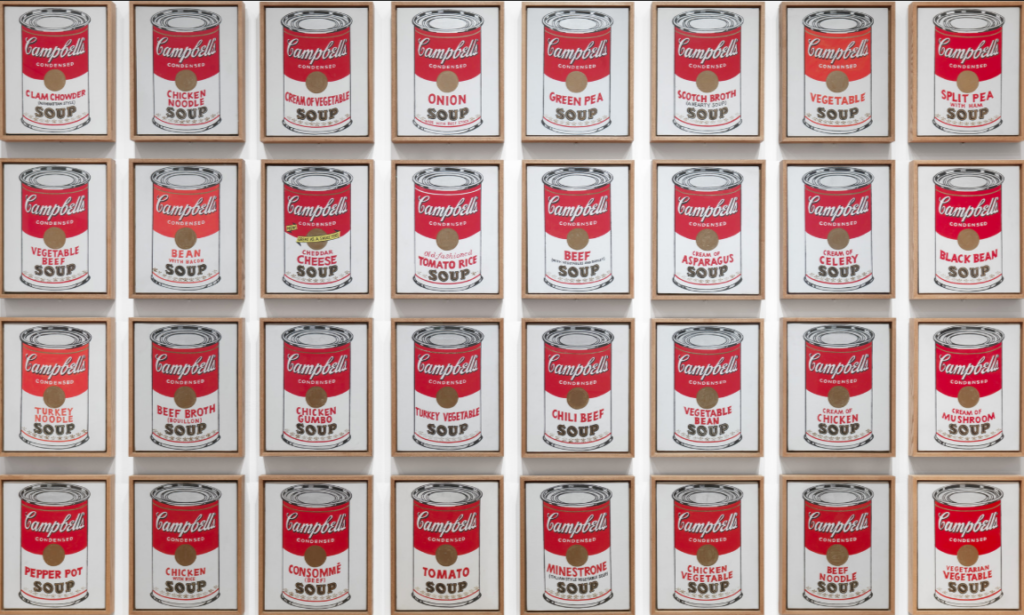
If Monet used repetition to study light, and Hokusai used it to explore perspective, Andy Warhol used repetition to create recognition, and, ultimately, a brand.
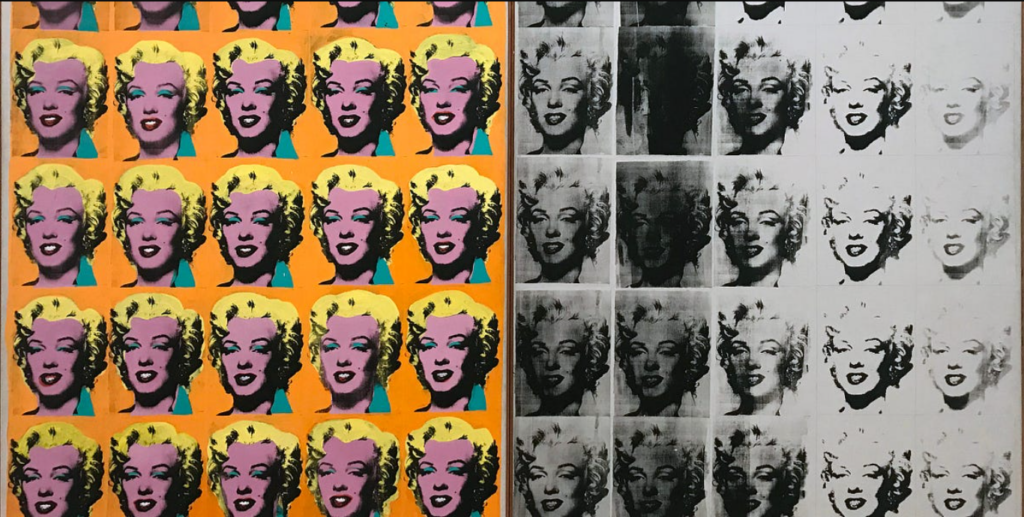
In the early 1960s, Warhol produced works that relied on repeated imagery to leave a lasting impression. His Campbell’s Soup Cans (1962) and Marilyn Diptych (1962) present the same objects and faces repeatedly, often through silkscreen printing, turning familiarity into a visual signature.
Warhol understood something simple but powerful: repetition makes images stick. By consistently presenting the same subjects, he blurred the lines between art, advertising, and popular culture. His series wasn’t just a formal experiment, it was a strategy for visibility. The clarity and consistency of his imagery made his work instantly recognizable, ensuring that audiences could identify it even before reading a description.
How Series Shape a Recognizable Visual Language
Across mediums and movements, series function as a training ground for artistic voice. Returning to the same ideas, materials, or structures helps artists make decisions instinctively. Color choices become more confident. Compositions grow more refined. The work stops feeling exploratory and starts feeling authored.
Over time, this consistency becomes recognizable. Viewers may not know why a body of work feels cohesive, but they sense it. That recognition, subtle but powerful, is what allows artists to stand out in crowded visual landscapes. A series tells viewers: This artist knows what they are doing. This work is intentional.
Series vs. Sameness: The Critical Difference
Not all repetition leads to strong series. The most compelling examples in art history were driven by inquiry, not convenience. Each work asked a slightly different question; each variation mattered.
The difference lies in attention. Successful serial work engages curiosity and responsiveness. Artists aren’t reproducing results, they’re extending ideas. This distinction matters today just as much as it did centuries ago.
Why Juried Exhibitions Value Bodies of Work
Contemporary juried exhibitions rarely evaluate work in isolation. Jurors look for:
- Consistency of vision
- Conceptual or thematic clarity
- Evidence of sustained engagement
- Professional presentation
A cohesive body of work signals seriousness. It suggests that the artist isn’t experimenting randomly, but developing ideas over time. Submitting a series lets jurors see not just what you make, but how you think; a mirror of how artists have historically been evaluated, from salons to museum exhibitions.
TheArtList and the Value of Cohesive Submissions
Platforms like TheArtList reflect this long-standing art-world reality. By encouraging artists to engage with exhibitions as part of an ongoing practice, not a one-time event, TheArtList supports sustained development that shapes serious artistic careers.
Artists who submit bodies of work rather than isolated pieces often find that opportunities build on one another. Each exhibition becomes a chance to refine, adjust, and return with greater clarity. This isn’t about chasing volume, it’s about building momentum through intention and coherence.
Series as a Long-Term Career Strategy
Art history reminds us that most recognizable artists weren’t defined by a single breakthrough piece. They were defined by bodies of work that unfolded over time. Working in series allows artists to:
- Develop confidence through repetition
- Create work that curators can contextualize
- Build portfolios that feel intentional
- Present a clear narrative across exhibitions
For artists navigating today’s competitive exhibition landscape, this approach is more relevant than ever. In short: series give your work a backbone.
Returning to an Idea Is Not Standing Still
Pressure—especially online—often pushes artists to pivot, reinvent, and produce “new” work constantly. Art history offers a quieter counterpoint. Returning to an idea doesn’t mean being stuck, it often means paying attention.
The artists we remember didn’t rush past their ideas. They stayed with them long enough to understand them fully. Series gave them the structure to do that. And in doing so, they created work that still speaks decades, or even centuries later.
Building Recognition Through Consistency
Recognition rarely comes from a single image. It comes from repeated encounters with work that feels unmistakably connected. A series allows viewers, curators, and collectors to recognize patterns, and recognition builds trust. Trust builds opportunity.
This is as true now as it was when Monet returned to his haystacks, Hokusai to his mountain, Sherman to her constructed selves, and Warhol to his icons.
🎨 RELATED READING: A Year of Intentional Creativity
Moving Forward With Intention
If you want to strengthen your work or submissions, art history offers a clear lesson: don’t rush to the next idea. Stay with the one that keeps calling you back. Build a body of work. Let it evolve. Let it speak collectively.
And when you’re ready to share it, seek opportunities that value consistency, vision, and growth.
At TheArtList, artists and photographers can:
- Join our Mailing List for curated open calls and exhibition opportunities delivered to your inbox
- Enter the Artist of the Month Contest to gain national visibility
- Search for Open Calls that reward thoughtful, cohesive submissions
Because recognition isn’t built in a single piece. It’s built in series.